
Hearing
Technology

The Best Technology Is The One You’ll Actually Wear
Choosing hearing technology starts with the life you want to hear more fully, not the device itself. Almond Hearing takes an independent, personalised approach, offering technology from all major manufacturers and recommending only what suits your hearing needs and lifestyle.

Most importantly, they believe technology is only worthwhile if you’ll actually wear it—so comfort, practicality and real-life usefulness come before the latest features.
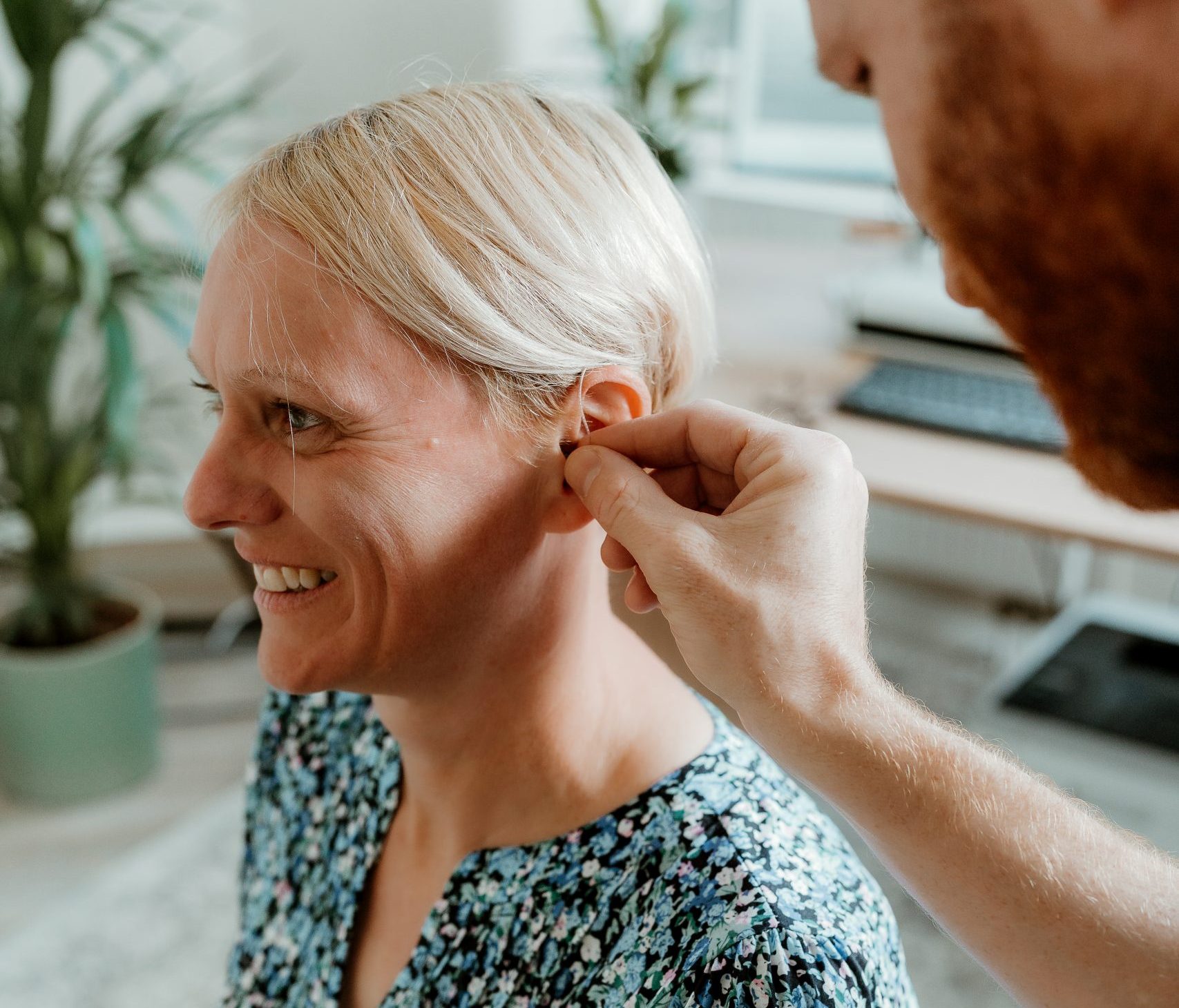
A smiling woman with short blonde hair wears a small hearing aid as a clinician gently adjusts it behind her ear during a fitting.
OUR MANUFACTURERS

Technology We Trust

Every name here is one we’d happily fit. Which is right for you is the part we work out together.


Pale Phonak lettering and the tagline “life is on” stand out against a dark rectangular field with a fine light border.
A black hearing technology device bears the ReSound GN logo in light lettering, with a dotted line and solid underline below.
Pale Oticon lettering and the “PEOPLE FIRST” slogan stand out on a dark rectangular sign for the hearing technology brand.
The Starkey name sits within a pale outlined star on a dark plaque, marking a hearing technology brand represented in Scotland.
A white Widex logo and “High Definition Hearing” lettering stand out against a dark background, with crisp, bold typography.
A pale, stylised lowercase u with a curved left stroke and tall, squared right stem forms a simple mark on a dark background.
A dark plaque bears the lowercase name “röger” in pale lettering, with three small circular dots arranged above the ö.
Pale Signia lettering and the tagline “Life sounds brilliant” appear on a dark rectangular plaque with a thin light border.
HEARING & STYLES

Styles, And Which Suits You

There’s no single best style. There’s the one that’s right for you, and that depends on your hearing and what matters to you day to day. Here’s the shape of the choices. We’ll narrow them down together when you come in.

Receiver In Canal (RIC)

The most popular style, and for good reason. A small case sits discreetly behind your ear with a fine wire carrying sound into the canal. Comfortable and barely visible, it suits a wide range of hearing, and because it can leave the ear more open, your own voice still sounds like you.

In The Ear (ITE)

Nothing sits behind the ear. The technology fills the outer part of your ear, which makes it simple to put in and take out, a good fit if dexterity is a consideration.

In The Canal (ITC, CIC And IIC)

The most discreet styles, small enough to sit out of sight, which is exactly why people want them. That discretion does come with a trade-off. Sitting deep in the ear, they can make your own voice sound a little boomy, and that’s more noticeable with a milder loss. For some people it’s well worth it to have something barely there. For others it isn’t. Neither answer is wrong. We’ll make sure you’ve heard yourself in them before you decide.

Behind The Ear (BTE)

The familiar style, and the most capable. Robust and easy to handle, able to support the fullest range of hearing, including more significant loss.


A pair of silver ReSound hearing aids rests in an open palm as another hand points to the devices, showing their compact design.

Never Miss A Word

Today’s Hearing Technology Does Far More Than Make The World Louder.
A dark teal icon depicts a desktop monitor beside a mobile phone, suggesting connected devices within the hearing technology range.
It connects to what you’re listening to. The television, your phone, the radio in the kitchen, the sound going straight to your ears at a level that’s right for you, so the punchline lands and the drama keeps its thread.
A dark teal battery outline with a lightning bolt links by cable to a two-pin plug, representing rechargeable hearing technology.
It charges overnight. Sit it on its charger last thing and it’s ready by morning, a full day of hearing from a single charge with no fiddly batteries to change.
A dark teal ear symbol formed from thick curved lines, with a question mark at its centre, represents a hearing question.
It works hardest where hearing is hardest. In a busy café or a noisy family kitchen, it lifts the voice in front of you and settles the sound around it, so following a conversation stops being such hard work.
A dark teal microphone symbol has a rounded capsule, curved support, central stem and horizontal base, representing hearing technology.
And when a room is really against you, a small remote microphone can sit beside the person you most want to hear, closing the distance and cutting through the background.

We Don’t Stop At The Fitting

Today’s hearing technology does far more than make the world louder.

Before you commit to anything, you trial it in your own home, in the rooms and the conversations where it actually has to work. We adjust from there based on how you find it.

Once you’re set up, you can call or pop in any time. A filter change, a lost receiver, something that doesn’t feel quite right, our front of house team are trained to sort most things on the spot while you have a coffee. If you need an audiologist, we hold repair slots in the diary most days, so you’re seen quickly.

Hearing changes, and so do prescriptions. We see you at six months, then once a year, with everything in between included.

You’ll find our prices on the price list, set out plainly so you know where you stand.
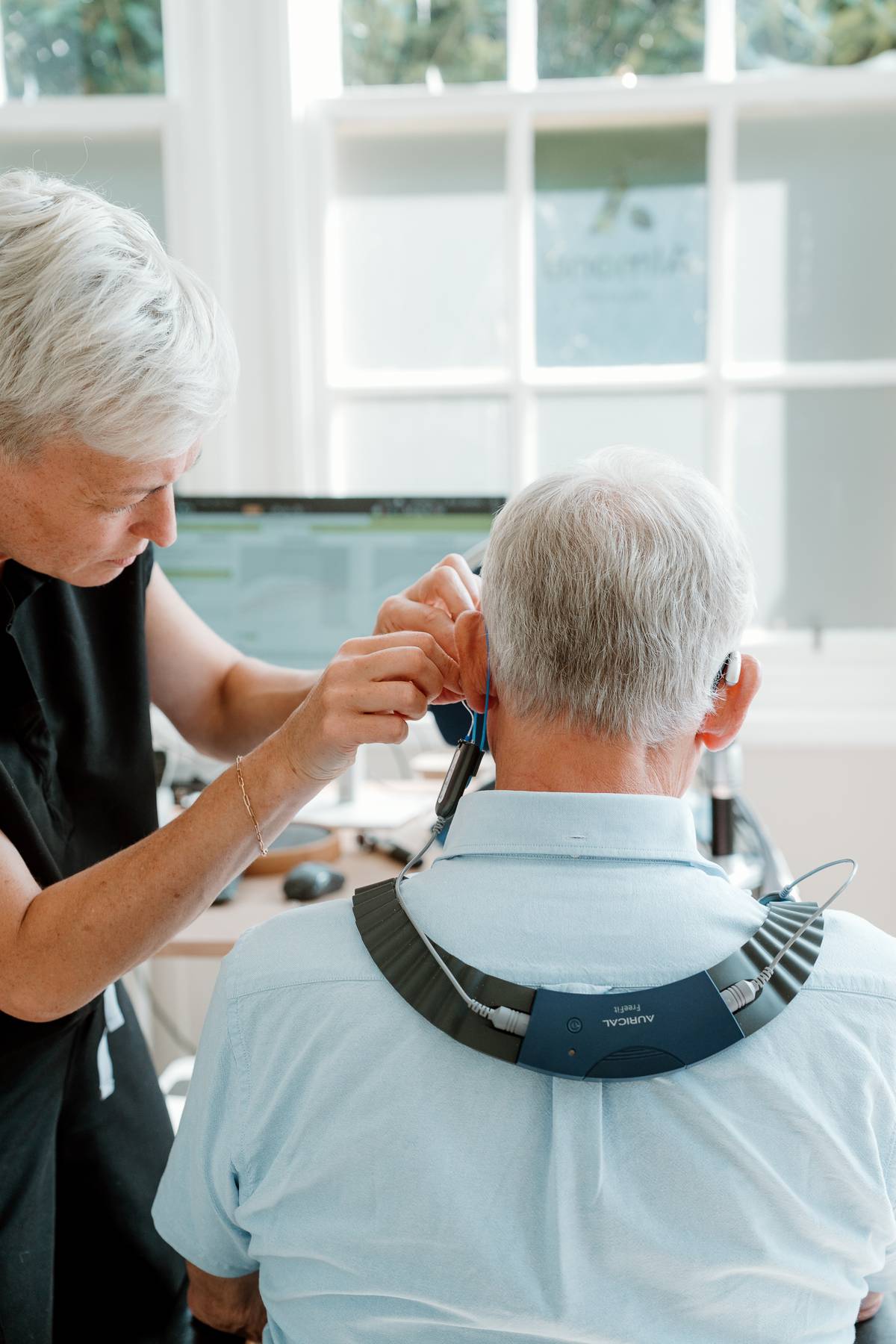
A hearing specialist adjusts an older man's hearing device as he sits wearing an Audiocal unit across his pale blue shirt.
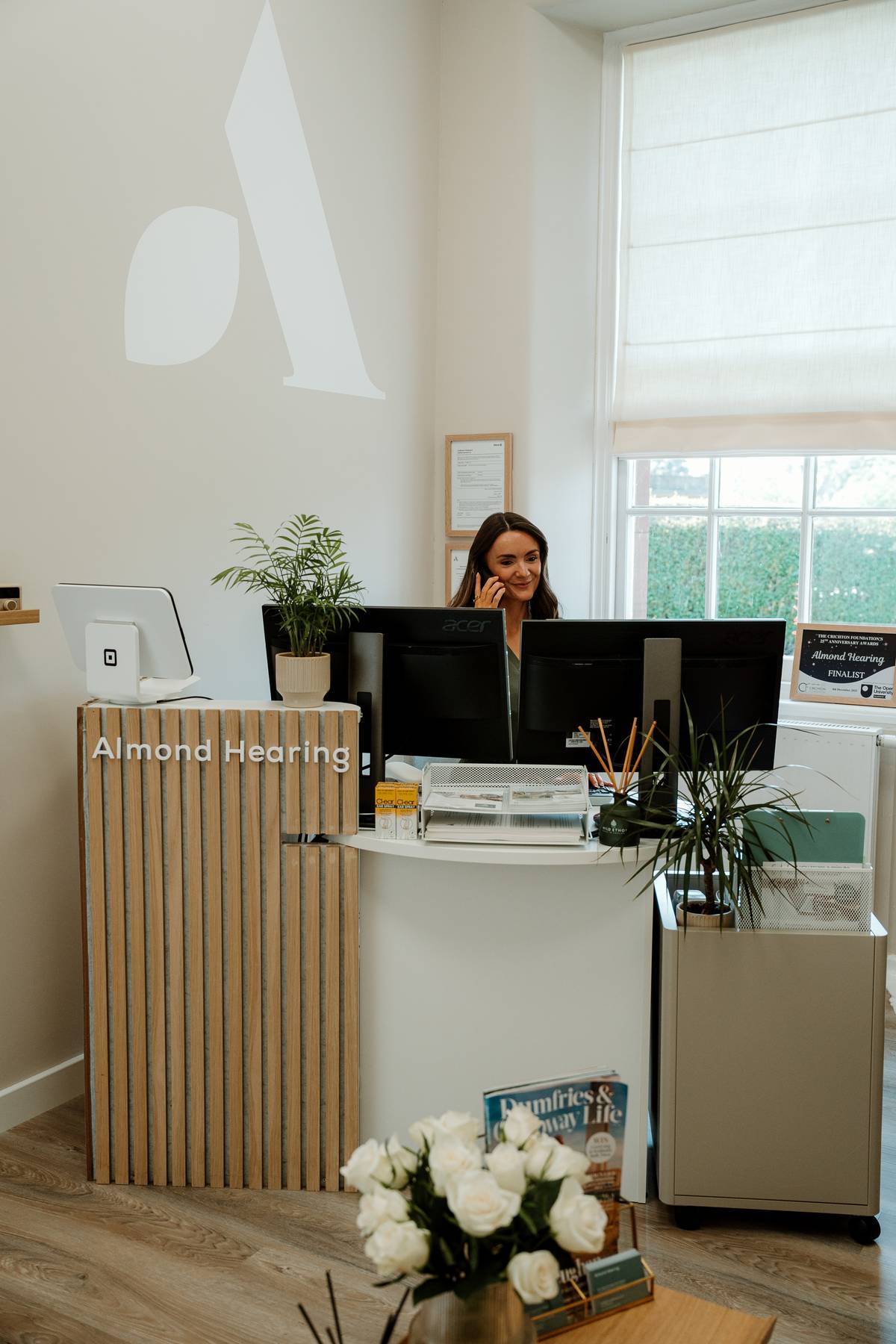
A receptionist speaks on the phone behind the Almond Hearing desk, surrounded by computer screens, potted plants and a sunlit window.

Book An Appointment

Get in touch and we'll be back to you to confirm a time and answer anything you'd like to ask before you come in.

"*" indicates required fields